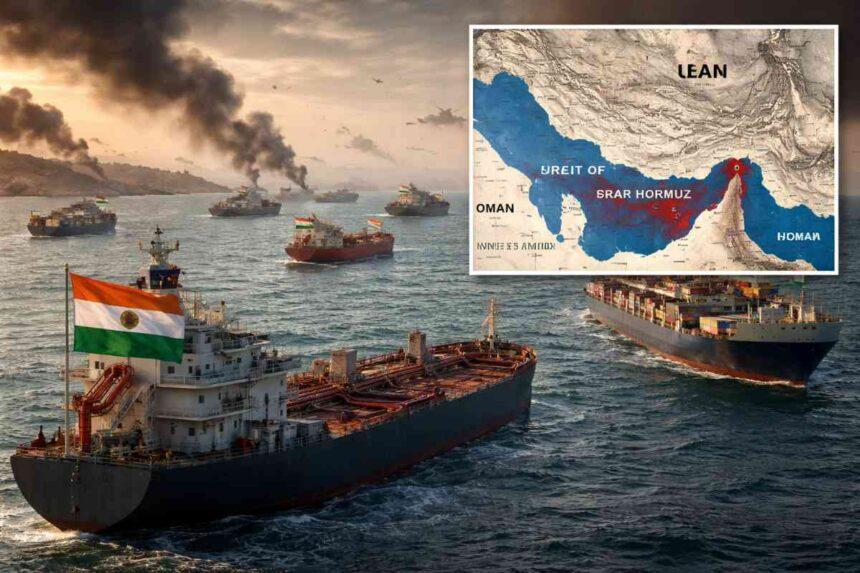
They Fire the Missiles, We Pay the Bills
With no fence or gate to keep them out, a gang of bulls, all horns and barrel-sized bellies, would come strutting into our roadside grassy yard, lumber down to the mango tree and park their hefty hunches in the shade, chewing their cud as if these belligerent beasts owned the little patch of land or had paid the rent, and behave as if this little yard were a geopolitical battleground! Each claiming it as their rightful territory!
Then, God knows what gets into the head of the hot-headed beasts all of a sudden! They would suddenly jerk to their feet, huffing menacingly, lower their heads, and charge at each other like two battle-hungry generals, spoiling for a fight turning a patch of earth into a war zone. The ground shudder beneath their pounding hooves as clouds of dust billows around them. The yard trembles with every stride, and anything caught between them becomes collateral damage.
The single row of young mango and lemon saplings around the corner with their lush, dark, tender leaves, are the raging bull’s favorite victims. One moment they stand fresh and green, their little leaves jeweled with sparkling dew drops. The next, a careless horn, and a trampling hoof, would turn a flourishing branch into flying debris. Their young leaves tremble in terror as the raging bulls lock horns and push each other with mighty indignation scraping the earth with their hind legs. The earth splatter, and my father’s little orchard becomes the unintended battlefield of two animals that had apparently decided to settle their diplomatic differences with their horns.
At the morbid sight of the angry bulls locking horns, straining with mammoth might to topple the other, my father, seething with rage, would throw himself into fray, wielding his bamboo lathi like a one-man peacekeeping force dispatched to a war zone. Angry words spilling from his lips, he would go after them, brandishing his stick as he chases the ugly combatants back onto the road. Then, he would survey the wreckage giving the retreating bulls a murderous glare, unleashing a furious stream of curses spilling from his lips. And then, he would rescue whatever remained of his beloved saplings. He never needed a speech to explain the latest outrage perpetrated by the bully bullocks. His verdict was always the same, “When the bulls fight, the calf gets trampled.”
Fifty years on, watching Washington and Tehran bare their teeth over Hormuz, nuclear enrichment, and the scared principles of national security, this Cold War kid finds himself thinking of those bulls. Some things, apparently, never stop charging. There is a marked difference, though, unlike their spiky horns, which at least know how to make a point, the weapons are more sophisticated, the generals wear uniforms, and the diplomats carry briefcases instead of bamboo sticks. But beneath the veneer, the logic has hardly changed.
The war-loving men in Washington and Tehran may dish out sophisticated diplomatic vocabulary with missiles doing the translation like deterrence, sovereignty, non-proliferation, maritime security, freedom of navigation, international waters, sanctions and many more, but for the ordinary citizens across South Asia, the translation is wonderfully simple. Petrol becomes expensive. Cooking gas disappears. Fertilizer costs more. Air tickets rise. Food becomes dearer. The currency weakens. And yet, there are people who say this is all necessary for global security. Global security, apparently, has discovered a very efficient way of arriving at the household kitchen.
The United States and Iran have spent months proving the oldest wisdom of all, “wars are easier to start than to finish.” The missiles are launched in the Middle East, the negotiations are held in diplomatic capitals, the television anchors debate civilization, sovereignty, damages, and victory, and the invoice quietly travels to Delhi, Dhaka, Kathmandu, Colombo, and Islamabad.
It seems the subcontinent is still paying the bill for some forgotten sins of the distant past, for they did not start the war, did not design the strategy, and certainly did not take sides in turning the Strait of Hormuz into a geopolitical chessboard. Yet they are the ones handed the bill for electricity, transport, food, and foreign exchange. In geopolitics, the spectators don’t just watch the game, they pay for it. South Asia sits on the Gulf’s energy and shipping lifelines and apparently gets the bill whenever the neighborhood catches fire.
In mountainous Nepal, prone to disasters of all sorts, the cruel joke is this. The war is thousands of kilometers away, but its bill arrives at the petrol pump, bus stop, kitchen, and airport. The calves count the cost while the bulls snort fire and fury.
The June U.S.–Iran ceasefire deal was music to the drumbeaters’ ears, hailed as a diplomatic breakthrough, until the drums started beating again. Pakistan played host and matchmaker. The Gulf states, including Oman, and other regional actors engineered the diplomatic architecture, particularly around the sensitive question of the Strait of Hormuz.
The 14-point Islamabad deal was a masterpiece of diplomatic engineering. The document provided for a ceasefire, commercial shipping through Hormuz, a halt to new sanctions and additional U.S. military deployments, economic measures, and negotiations over the nuclear issue. The longer-term status of Hormuz was left to broader negotiations involving Iran and the Gulf states. The deal in diplomatic terms served as a bridge, the bridge had a 60-day warranty, and the warranty expired on August 17.
The June arrangement had all the classic ingredients of a deal everyone could sell as a victory and quietly avoid implementing. And, naturally, the winner expected the loser to cooperate because apparently that’s how victory works. That is where diplomacy becomes theatre.
The US wants Iran to become less dangerous without giving Iran enough concessions to become more confident. It also wants Hormuz open without allowing Iran to turn the world’s energy artery into a bargaining chip. That is not an easy sales pitch in Tehran. And therefore, no trick in Washington’s diplomatic pouch could manufacture Iranian consent. Eventually, Washington is left with no option but to negotiate with the very government it had spent months trying to bring to its knees, apparently, diplomacy begins where coercion runs out of road.
The great diplomatic irony? Sanctions didn’t work. Military pressure didn’t work. Even bombing the adversary into a negotiating mood didn’t work. So, eventually, everyone had to sit down and talk.
For Tehran, the central issue is not simply nuclear technology but sovereignty. Iran does not want a settlement that can be portrayed as surrender to American military power.
Iran’s position is that for the Strait to reopen, the US should fulfil its commitments first. The demands Iran has publicly tied to reopening the Strait include lifting the U.S. blockade, removing oil sanctions, releasing frozen assets and ending military threats and operations. Washington’s demands Iran to open the Strait first.
The U.S.-Iran standoff has become a chicken-and-egg farce: Washington wants Iran to open Hormuz first; Tehran wants Washington to lift the blockade first. Neither side seems willing to lay the first egg. And they keep poking each other’s weak spots, like two schoolboys trying to find out who will yelp first.
Nearly 2 billion South Asians are stuck with the same geopolitical dilemma! They are close enough to West Asia to inhale the smoke, but too far away for their voices to reach the room where someone else is deciding where to light the fire. South Asia’s energy policy has been basically import, pray, and repeat.
For South Asian countries, one bitter truth is that they don’t control the tap, but they get the bill. India imports most of its crude, so every Middle East oil shock comes with a growth headache.
When Hormuz goes “boo,” Pakistan goes hunting for alternative oil routes. When energy supplies tighten, in Bangladesh, even the light bulb gets an austerity memo. And Nepal, rich in glaciers but poor in oil, has no oil fields to fuel its stove; its economy instead runs on Gulf workers, flights, and remittances. When the Gulf sneezes, Nepal checks the fuel gauge.
And then comes South Asia’s second vulnerability that is millions work in the Gulf. So the region gets a double whammy; it imports the Gulf’s oil shocks and exports its own workers there. That means expensive energy at home plus employment uncertainty abroad. The war therefore raises the price of the petrol that takes the worker to the airport while simultaneously threatening the job waiting for him at the other end.
For South Asians already feeling the heat, it’s less “out of the frying pan” and more “straight into the fire.” They live with the constant fear that the Gulf war could take an even nastier turn. If the June framework stays buried, and both sides keep rattling their sabers, the “war path” offers the usual menu. More bombs, more rubble, more innocent deaths, and, apparently, an even bigger appetite for war! The ugliest scenario chances of escalation through miscalculation.
Iran has apparently decided that bending the knee is not on its diplomatic agenda. Washington, meanwhile, seems in no mood to watch Tehran stand so stubbornly in its boots. While the stalemate hangs around like an unwanted guest, the nightmare sequence comes knocking. Hormuz stays restricted. Oil prices spike. Washington turns up the pressure. Iran retaliates. Washington retaliates harder. Gulf infrastructure gets hit. Shipping insurance goes through the roof. Oil goes higher. Inflation spreads across Asia. Central banks hike rates. Governments subsidize fuel. Poor households pay the real bill. That is precisely why the June agreement should not be sacrificed on the altar of political optics.
And now comes the million-dollar question, will anyone get them around the negotiating table, or will the table remain the only party willing to negotiate?
No one has a crystal ball to predict where this war goes. But one can still keep a sliver of hope alive amid the storm; revive the dying deal and turn its 14 points into a phased peace bargain. It may not be glamorous. It may not win anyone a standing ovation. But peace rarely needs good optics; it needs a pulse. Sticking to one’s guns and fighting it out in a duel may look heroic in a spaghetti Western. Real wars have no director, no retakes and, unfortunately, no popcorn.
So perhaps the leaders on both sides should dismount from their Pegasus of ego, holster the bravado, and give peace a chance before the battlefield runs out of blood and the region runs out of patience.
Of the June deal’s 14 points, the nuclear bargain appears to sit at the heart of Washington’s concerns. But trying to force Iran to its knees with ‘fire and fury’ has only added fuel to the flames, with little peace to show for it. The smarter bargain is brutally simple; allow Iran to pursue civilian nuclear energy under internationally verifiable safeguards. Shift the focus from bombing Iran’s nuclear program to monitoring it. Inspect the centrifuges, verify the safeguards, and stop trying to solve a nuclear problem with a military matchstick.
In return, Washington gets what it wants. Iranian civilian enrichment stays but under strict, verifiable limits. The idea may offer the best middle path; kill the snake without smashing the club. Sensible, certainly! Politically painless for Washington, certainly not! But diplomacy is precisely about finding workable compromises when the alternatives are bombs, bodies and another round of headlines. Demanding that Iran surrender every element of its nuclear capability is effectively asking Tehran to walk the plank. That is hardly likely to resonate with Iranians. The practical objective should be simple. Say no to an Iranian nuclear weapon, while saying yes to security guarantees for Iran’s sovereignty and territorial integrity. Stop the bomb, not the dignity. A deal that protects the world from a nuclear weapon without forcing Iran to surrender its national pride is diplomacy. Anything else is coercion dressed up as diplomacy.
The other thorny issue is the Strait of Hormuz. It should be neither Washington’s geopolitical property nor Iran’s tollbooth and Gulf states should not be handed a security order written entirely by outsiders. The answer is a regional, multilateral maritime mechanism. Iran, Oman and the Gulf states at the table, with one non-negotiable principle that is commercial ships sail freely, without political shakedowns. The June framework already pointed in that direction. The sensible next step is to widen the table, not widen the war. Make Hormuz a place where nobody gets to say, “My navy, my rules.” And everyone sings the same refrain: “Our waterway. International navigation. Jointly guaranteed.”
Why can’t the U.S. simply force Iran to surrender? Because Iran is not Iraq. And that is one distinction Washington cannot bomb away. Iran is a large country of roughly 90 million people, with a substantial industrial base, significant missile capabilities, a large military establishment, difficult geography, deep regional networks and decades of experience living under sanctions. It also sits astride one of the world’s most important energy chokepoints. Its economy is badly damaged, its currency has suffered, and ordinary Iranians are under enormous pressure. But economic pain does not automatically produce political surrender.
And Washington has learned another lesson repeatedly, and usually the expensive way; you can demolish infrastructure far faster than you can demolish a political idea. Iran can be bombed, weakened and economically squeezed until its economy is pushed to the brink. But erasing Iran as a strategic actor is another matter entirely. Concrete can be pulverized, but political ideas are rather annoyingly harder to bulldoze.
And why can’t Iran simply win? Because Iran is hurting badly too. Its infrastructure has been battered, its economy squeezed, its oil revenues constrained, and its currency weakened. Ordinary Iranians are paying the bill for a confrontation they did not order from the menu.
So, Tehran faces the ultimate geopolitical juggling act; look strong enough at home to claim victory, while quietly looking for the nearest exit door. It has to keep the flag flying, the rhetoric roaring and, somewhere behind the curtain, the search for a way out quietly ticking along. That is not necessarily contradictory. It is classic bargaining. Fight hard enough that the other side respects your leverage; negotiate hard enough that you don’t have to fight forever.
Iran’s ability to keep Hormuz disrupted gives it bargaining power disproportionate to its economic size. That is why the United States keeps finding itself back at the negotiating table. Not because Iran is stronger than America in conventional military terms. It isn’t.
Rather, Iran possesses several forms of asymmetric leverage that make military victory prohibitively complicated and politically expensive. Neither side will actually win? And this may be the most important conclusion. The United States can probably destroy more. Iran can probably make the price of that destruction far higher than Washington would care to pay. And there lies the problem; both can hurt the other and neither can easily get what it truly wants.
America cannot bomb, sanction or squeeze Iran into becoming the obedient regional player it would prefer. Iran, for its part, cannot defeat the United States militarily or pack Washington’s bags and evict it from the Middle East by Friday. So what does “victory” eventually look like? Probably something much less cinematic: a grubby negotiated compromise, stitched together after months of threats, blood, bluster and broken furniture, then unveiled by both governments as a magnificent historic triumph.
In other words, everyone gets to declare victory, provided nobody asks too closely what, exactly, was won.
In South Asia, we have our own version of the peace deal. And it is like a breathtakingly beautiful painting with no gallery, no walls, and most importantly, no one willing to hang it. From Delhi to Dhaka, Kathmandu to Colombo and Islamabad, the region perhaps wishes for a settlement built around five things. They are; permanent freedom of commercial navigation through Hormuz, no American control, no Iranian control, no blockade; a verifiable Iranian nuclear settlement, reciprocal sanctions relief, no more attacks on Gulf energy infrastructure. While the great powers bare their teeth, rattle sabers and discuss national security the South Asia, meanwhile, clears its throat and says, “If it isn’t too much trouble, could you please remember that we also need to eat and keep the lights on?”
Perhaps South Asia should demand one more thing. A bill arguing that if great powers insist on turning their security disputes into global energy shocks, why should developing countries be handed the invoice? Why should ordinary people in South Asia pay billions more for fuel, food, transport and electricity because two heavily armed powers cannot settle their differences without turning the world’s energy markets into a panic room?
So perhaps the time has come to retire the grand language of victory. There will be no clean military victory. There will be no Iranian surrender worthy of a Hollywood ending. There will be no American triumph in which Tehran simply signs away its strategic autonomy. There will be no magical return to the world before the war.
The June 14 framework was imperfect. But imperfect peace is usually preferable to perfect principles accompanied by missiles.
The question now is whether the expiration of the ceasefire will pave the way for another war until both sides finally realize that the document they failed to save may have been the least bad road out.
Because while Washington and Tehran debate who blinked first, the rest of us are watching the price of petrol.